

Why Does Melasma Develop and How Can It Be Managed?
Melasma management often requires a personalized approach based on each patient’s skin concerns, triggers, and desired outcomes. At Victoria Plastic Surgery Center, Dr. Suh, MD, focuses on understanding the factors contributing to melasma and recommending suitable treatment options to help improve skin tone and appearance. Our team guides effective strategies designed to address pigmentation concerns while supporting healthier-looking skin. With customized care and professional expertise, our team helps patients explore options for managing melasma with confidence. For more information, please contact us or book an appointment online. We are conveniently located at 8503 Arlington Blvd #130, Fairfax, VA 22031.
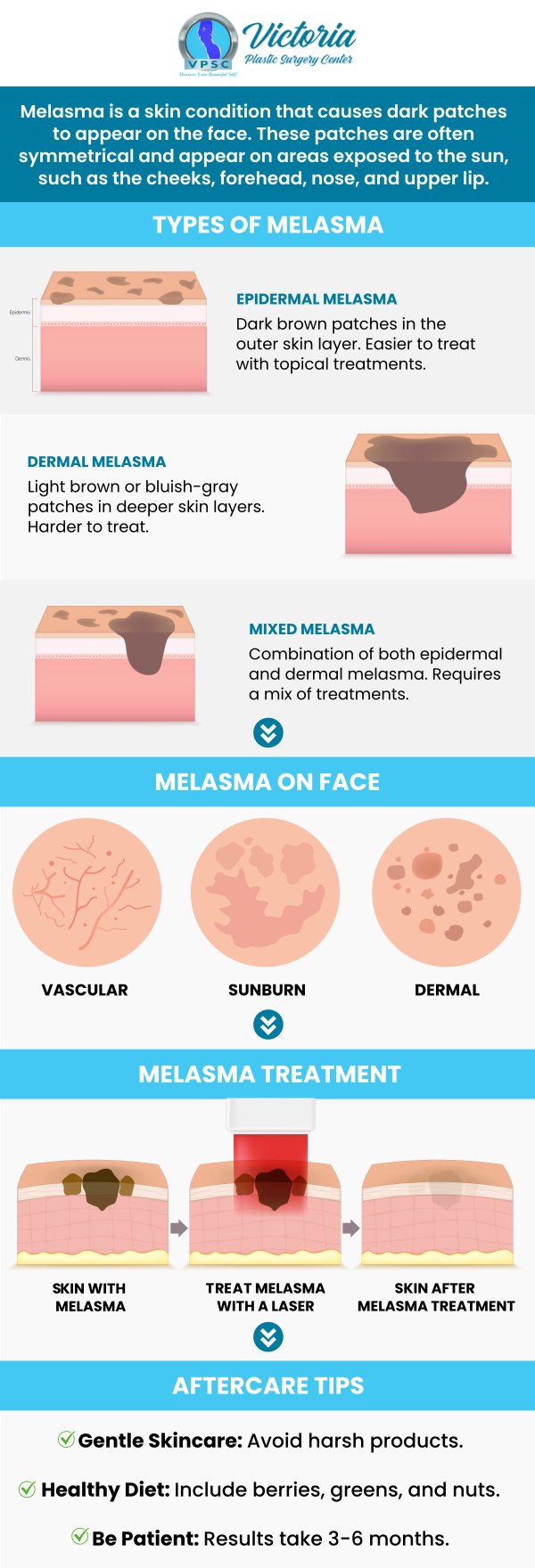
Table of Contents:
What is melasma, and why does it cause skin discoloration?
What factors can contribute to the development of melasma?
How can sun exposure and hormonal changes affect melasma?
Why do melasma concerns vary from person to person?
How can Victoria Plastic Surgery Center provide personalized melasma treatment recommendations based on each patient’s skin concerns and goals?
Melasma is a common skin condition that causes brown, gray, or tan patches to appear on areas such as the cheeks, forehead, nose, and upper lip. It develops when melanocytes, the cells responsible for producing skin pigment, create excess melanin, leading to uneven skin coloring.
This condition is often more noticeable because the affected areas may appear darker than the surrounding skin. While melasma is not harmful, changes in skin tone can affect confidence and may require professional guidance to understand available management options.
Our team focuses on helping patients understand the causes behind their pigmentation concerns and explore appropriate approaches based on their individual skin needs. Victoria Plastic Surgery Center provides personalized recommendations to help patients address melasma concerns with confidence.
Melasma can develop due to a combination of internal and external factors that influence pigment production in the skin. Common contributors may include hormonal fluctuations, sun exposure, genetics, certain medications, and changes in skin sensitivity.
Each person’s skin responds differently to these triggers, which is why some individuals may experience more noticeable pigmentation changes than others. Identifying possible contributing factors can help create a more targeted approach for managing melasma.
Our team evaluates each patient’s concerns, skin characteristics, and lifestyle factors to better understand their pigmentation patterns. Patients receive individualized guidance focused on their unique melasma management goals.
Sun exposure can play a significant role in melasma because ultraviolet rays may stimulate pigment production and make discoloration appear more prominent. Regular exposure without proper protection can contribute to ongoing pigmentation changes and may affect treatment results.
Hormonal changes, including those related to pregnancy, birth control use, or other shifts in hormone levels, can also influence melasma development. These changes may activate pigment-producing cells and increase the likelihood of uneven skin tone.
Our team helps patients understand how environmental and hormonal factors may impact their melasma concerns. Our team offers personalized recommendations that consider these influences while supporting long-term skin health.
Melasma can look different for every individual because several factors influence how pigmentation develops and responds over time. Skin type, genetics, hormone levels, sun exposure habits, and previous skincare routines can all affect the appearance and severity of melasma.
Some patients may notice mild discoloration, while others may experience more noticeable patches that require a customized management plan. Understanding these differences is important when selecting suitable treatment options.
Our team takes time to evaluate each patient’s specific skin concerns and desired outcomes before suggesting next steps. Our team creates personalized melasma treatment recommendations designed around each patient’s unique needs.
Effective melasma management begins with understanding the patient’s skin condition, concerns, and expectations. A personalized evaluation can help determine factors contributing to pigmentation changes and identify approaches that align with the patient’s goals.
During a consultation, treatment recommendations may be based on skin type, pigmentation patterns, lifestyle factors, and previous skincare experiences. This individualized approach helps patients better understand their options and make informed decisions about their care.
Our team is dedicated to providing customized guidance and support throughout the melasma management process. Victoria Plastic Surgery Center works with patients to develop personalized recommendations focused on achieving healthier-looking, more balanced skin. For more information, please contact us or book an appointment online. We are conveniently located at 8503 Arlington Blvd #130, Fairfax, VA 22031. We serve patients from Fairfax VA, Falls Church VA, and Northern Virginia, including Pine Ridge VA, Mantua VA, West Falls Church VA, Woodley VA, and surrounding areas.
Check Out Our 5 Star Reviews



Additional Services You May Need
▸ CoolSculpting
▸ Face Lift
▸ Facial Rejuvenation
▸ Breast Enhancement
▸ Body Contouring
▸ Photo Rejuvenation
▸ Fat Reduction Treatment
▸ Face and Skin Care
▸ Botox & Fillers
▸ Microneedling
▸ Acne & Scar
▸ Perfect Derma Peel


 Send Text
 How May I Help You?